Carrying Tension You Can't Stretch Away? How Somatic Movement Helps
Quick Answer: Some tension lives less in the muscle itself and more in the nervous system's habit of holding. Stretching lengthens tissue for a moment, yet the body often returns to its familiar pattern soon after. Somatic movement takes a different route, using slow, gentle, mindful motion to help you notice how you hold and give the body a felt sense of another option. It is a form of movement education and self-awareness, not medical care. For any pain, injury, or health concern, please consult a licensed healthcare provider.
You roll your shoulders back for the tenth time before lunch, and for a breath or two the tightness softens. A few minutes later it settles right back into your neck and upper back, as if it never left. You have tried the stretches you found online, the doorway lean, the slow reach toward your toes, and each one gives you a brief window of relief that closes almost as soon as you sit back down at your desk. If that pattern feels familiar, you are not doing anything wrong. You may simply be meeting a kind of tension that stretching alone was never built to reach. And that is worth understanding.
Why Some Tension Refuses to Stretch Away
Muscles do not tighten at random. Much of the holding you feel is organized by your nervous system, which is constantly deciding how much tone your muscles need to keep you upright and ready for whatever the day brings. When life asks a lot of you over a long stretch of time, your body can settle into a baseline of low-level bracing that starts to feel normal. You stop noticing it, but your shoulders, jaw, and hips keep quietly doing the work.
A holding pattern is a habit, not just a knot
A stretch pulls on tissue from the outside. It can feel wonderful, and it can genuinely lengthen a muscle in the moment. What it does not always do is change the underlying instruction your nervous system keeps sending to that muscle. If the pattern that created the tightness is still running in the background, the muscle tends to return to the length your body considers familiar.
Bracing often outlasts the reason for it
You might have first tightened your neck during a stressful season years ago. The season passed, but the holding stayed, because your body kept the pattern going long after the original need for it faded. This is a common human experience, and noticing it can be the first gentle step toward change.
Effort can quietly add to the load
Many people respond to stubborn tension by pushing harder, stretching more aggressively, or forcing a muscle to release. Sometimes that added effort simply gives the nervous system more to brace against. A softer, more curious approach can feel counterintuitive and yet land closer to what the body is actually asking for.
Stretching a Muscle Versus Re-Educating a Pattern
It helps to see stretching and somatic movement as two different conversations with your body rather than as rivals. Both have their place, and many people enjoy a mix of the two.
Stretching speaks to the tissue
When you hold a stretch, you are asking a muscle to tolerate a longer position. This can support flexibility, warm you up before activity, and feel pleasant after a long day. The message travels mostly one direction, from you to the muscle, and the effect often lasts as long as your body remembers the stretch.
Somatic movement speaks to the nervous system
Instead of pulling on a muscle, somatic movement invites you to move slowly and pay close attention to the sensation of moving. You might rock a joint gently, let a limb sway, or explore a small range of motion with real curiosity about how it feels. This kind of movement is less about achieving a shape and more about updating the way your brain and body coordinate. The aim is to help your nervous system notice a pattern and sense that a different, easier option exists.
Re-education happens through awareness, not force
The word education matters here. You are not being fixed or corrected by an outside expert. You are being guided to feel what you usually move past too quickly to register. When you slow down enough to sense how your shoulder actually moves, your body gains information it can use to let go of unnecessary effort. That felt sense of ease is something you carry with you, because it lives in awareness rather than in a single stretch.
Tip: When you try a gentle movement at home, move slowly enough that you can describe the sensation to yourself in words. Naming what you feel, such as heavy, smooth, catchy, or light, keeps your attention in your body and helps the movement stay a conversation rather than a task.
How Gentle, Mindful Movement Invites the Body to Let Go
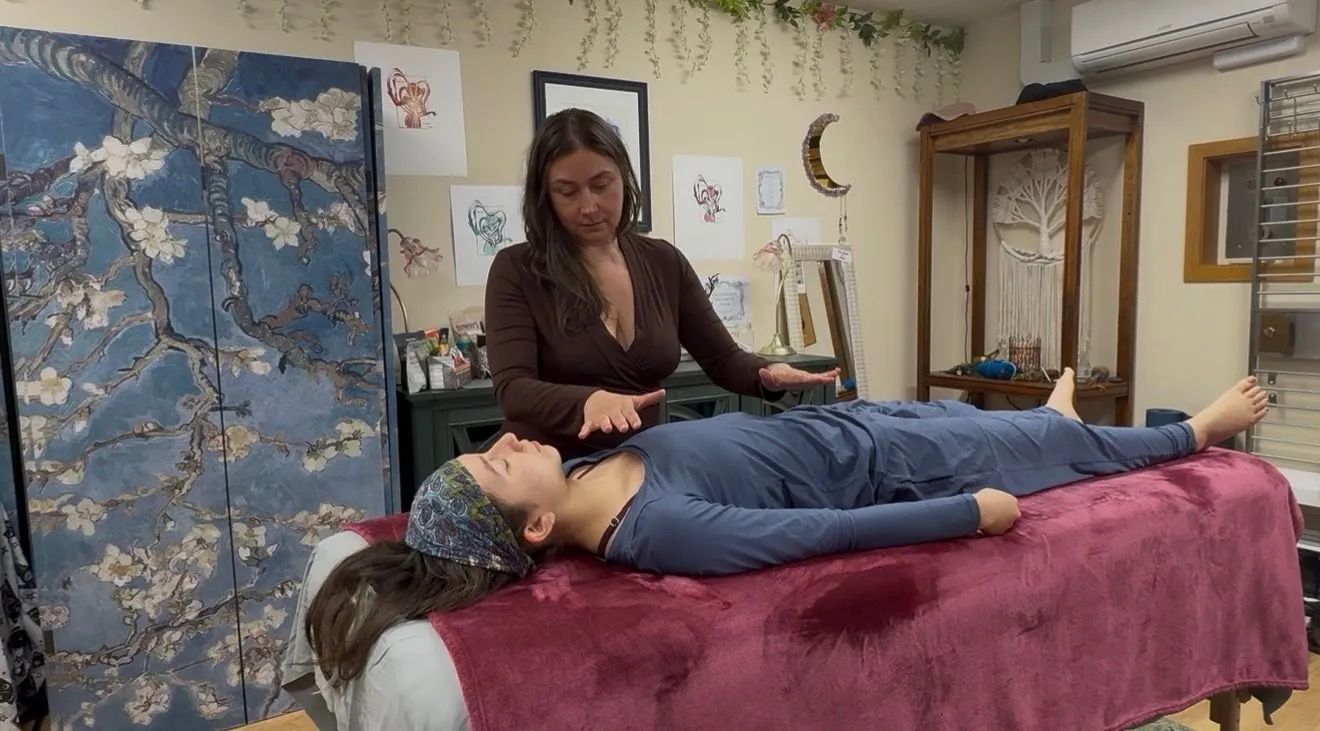
Trager somatic movement work rests on a simple idea. The body tends to soften when it feels safe, unhurried, and free of demand. Rather than working against your tension, this approach works with your attention, offering your nervous system a steady stream of pleasant, low-effort input.
Slow rocking and swaying feel reassuring
Rhythmic, gentle motion is something most bodies find soothing, the way a slow rock can settle a restless mind. When a movement is light and repetitive, your nervous system has little reason to brace, and muscles that were holding can begin to soften on their own terms.
Comfort is the invitation, effort is not
In this kind of work, nothing is forced past what feels good. You are encouraged to stay within a range that feels easy and pleasant, because comfort is exactly what signals safety to the body. That sense of safety is often what allows deeply held tension to ease.
Awareness travels beyond the session
One of the quiet gifts of mindful movement is that the awareness you build stays with you. After paying attention to how your shoulders move, you may catch yourself hiking them toward your ears while you read email, and simply noticing lets you set them down. Over time, these small moments of noticing can add up to a body that holds a little less by default.
Breath tends to follow ease
As bracing softens, many people find their breathing naturally deepens and slows. You do not have to force a big breath. When the body feels less need to guard, the breath often lengthens on its own, which can bring a welcome sense of calm.
Building Body Awareness in Everyday Life
You do not need a special hour set aside to begin noticing how you hold tension. The most useful practice often happens in the ordinary moments that fill your day, whether you are commuting across the Seattle area, sitting through back-to-back meetings, or standing at the kitchen counter in Burien after work.
Check in without judging
A few times a day, pause and scan from your jaw to your shoulders to your hips. You are not trying to fix anything, only to notice. Awareness itself is often enough to invite a small release, and it costs you nothing but a moment of attention.
Let small movements be enough
A slow neck turn, a gentle shoulder roll, a soft sway from side to side while you wait for the kettle can all give your nervous system a taste of easy motion. The point is not the size of the movement but the quality of attention you bring to it.
Notice your patterns at the desk
Long hours of desk work and long commutes are common across King County, and both tend to encourage the same rounded, braced posture. Rather than forcing yourself upright, experiment with gently shifting your weight, letting your ribs move as you breathe, and sensing where you can soften.
Warning: Gentle movement is meant to feel comfortable. If a motion produces sharp pain, numbness, dizziness, or any symptom that concerns you, stop and check in with a licensed healthcare provider. Somatic movement is educational and self-awareness oriented, and it is not a substitute for medical evaluation or care.
Frequently Asked Questions
Is somatic movement the same as stretching?
Not quite. Stretching lengthens a muscle from the outside, working tissue directly. Somatic movement uses slow, mindful motion, helping your nervous system notice how it holds and sense easier ways to move. Many enjoy both.
Why does my tension keep coming back after I stretch?
Often the tightness is maintained by a habit of holding in your nervous system rather than the muscle alone. A stretch lengthens tissue briefly, but if the underlying pattern keeps running, tension simply returns again.
Do I need to be flexible or fit to try somatic movement?
No. Somatic movement is gentle by design, staying within a comfortable range for each person. Because the focus rests on awareness and easy motion rather than effort, people of many ages and abilities can explore.
How is this different from a regular massage?
A traditional massage often works muscles directly to relieve tension. Somatic movement, by contrast, uses light touch and guided motion to communicate ease to the nervous system, helping you learn new movement habits beyond sessions.
Can somatic movement treat my back pain or another condition?
Somatic movement is gentle movement education and self-awareness, not medical treatment, and is not intended to diagnose, treat, or cure any condition. For pain, injury, or health concerns, please consult a licensed healthcare provider directly.
How often should I practice to notice a difference?
There is no single rule. Small, regular check-ins woven into your day help awareness grow, and some people also value periodic sessions with a practitioner. What matters most is consistency and a patient, non-forcing approach.
Meeting Your Tension With a Little More Kindness
The tension you cannot stretch away is not a sign that something is wrong with you. It is usually a pattern your body learned for good reasons, and patterns can soften when you meet them with slowness, attention, and care rather than force. By trading the push for gentle curiosity, you give your nervous system a chance to feel that another way of moving is possible, and that felt sense is something you get to carry into every ordinary moment of your day.
If you are ready to feel more at home in your body, gentle
somatic movement
offers a calm, unhurried place to begin noticing the tension you carry and exploring easier ways to move. Indigo Way, serving Burien, Washington, and the surrounding areas, has 10
years of experience and a holistic, whole-person coaching approach, offering supportive, educational sessions focused on body awareness and ease rather than quick fixes or medical claims. Reach out to Indigo Way
to explore a session and take a first gentle step toward moving through your days with more comfort.